Wan 3.0 and Seedance 2.5 now overlap on the headline number: both can produce videos up to 30 seconds. The practical difference is what happens before and after generation. Wan 3.0 is a direct Alibaba Cloud API built to turn text, images, video, audio, documents, or a public web page into a finished audiovisual sequence. Seedance 2.5 is a hosted creator workflow with a browser workspace, up to 50 image, video, and audio references, and plan-based credits. Wan's official 3.0 repository currently contains documentation and a license, but no downloadable checkpoint files. That makes the choice less about a speculative quality ranking and more about API integration, creator workflow, reference format, and whether local model ownership is mandatory.
Last verified: August 27, 2026. Prices, promotion dates, repository contents, and product controls can change.

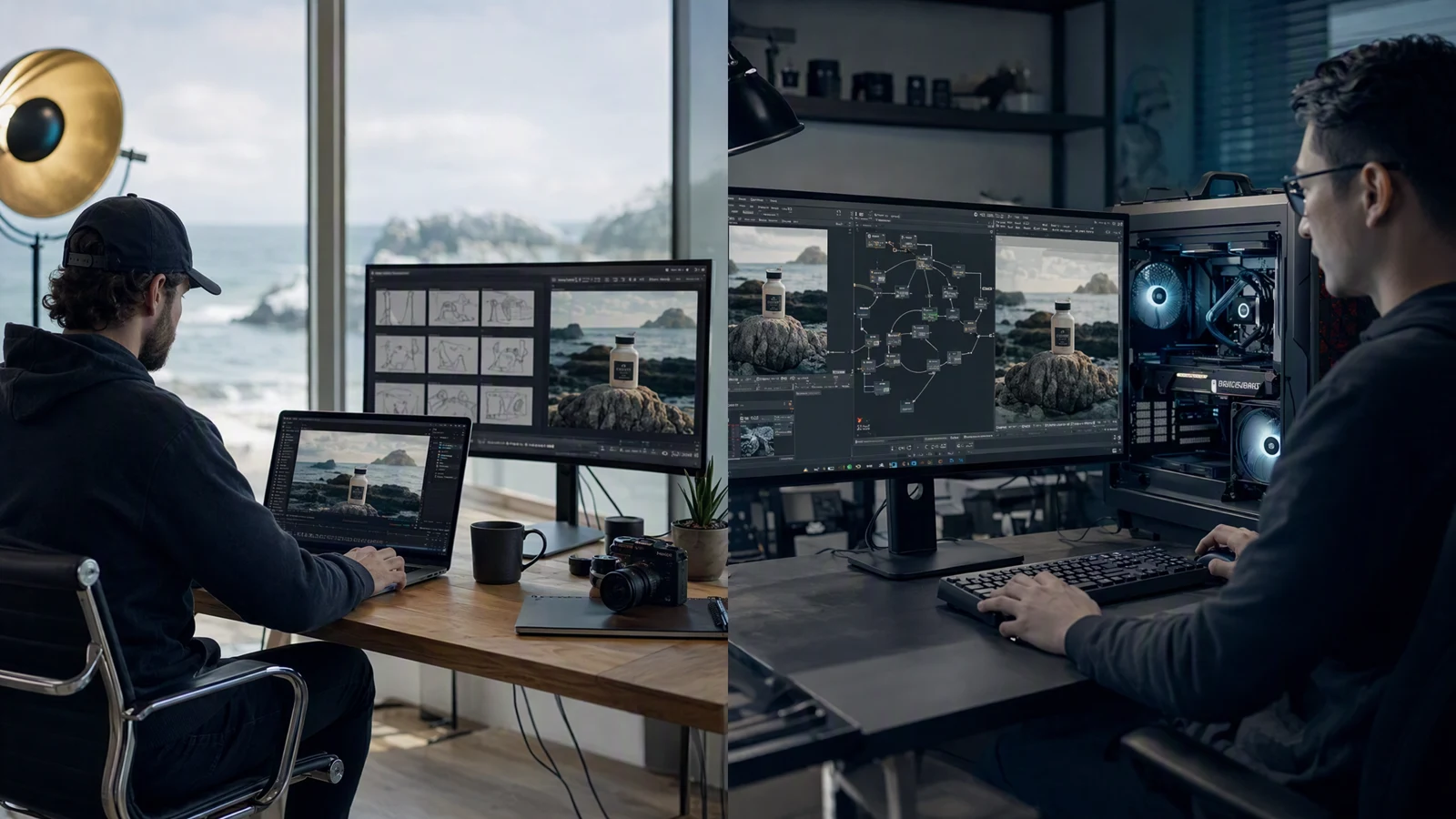
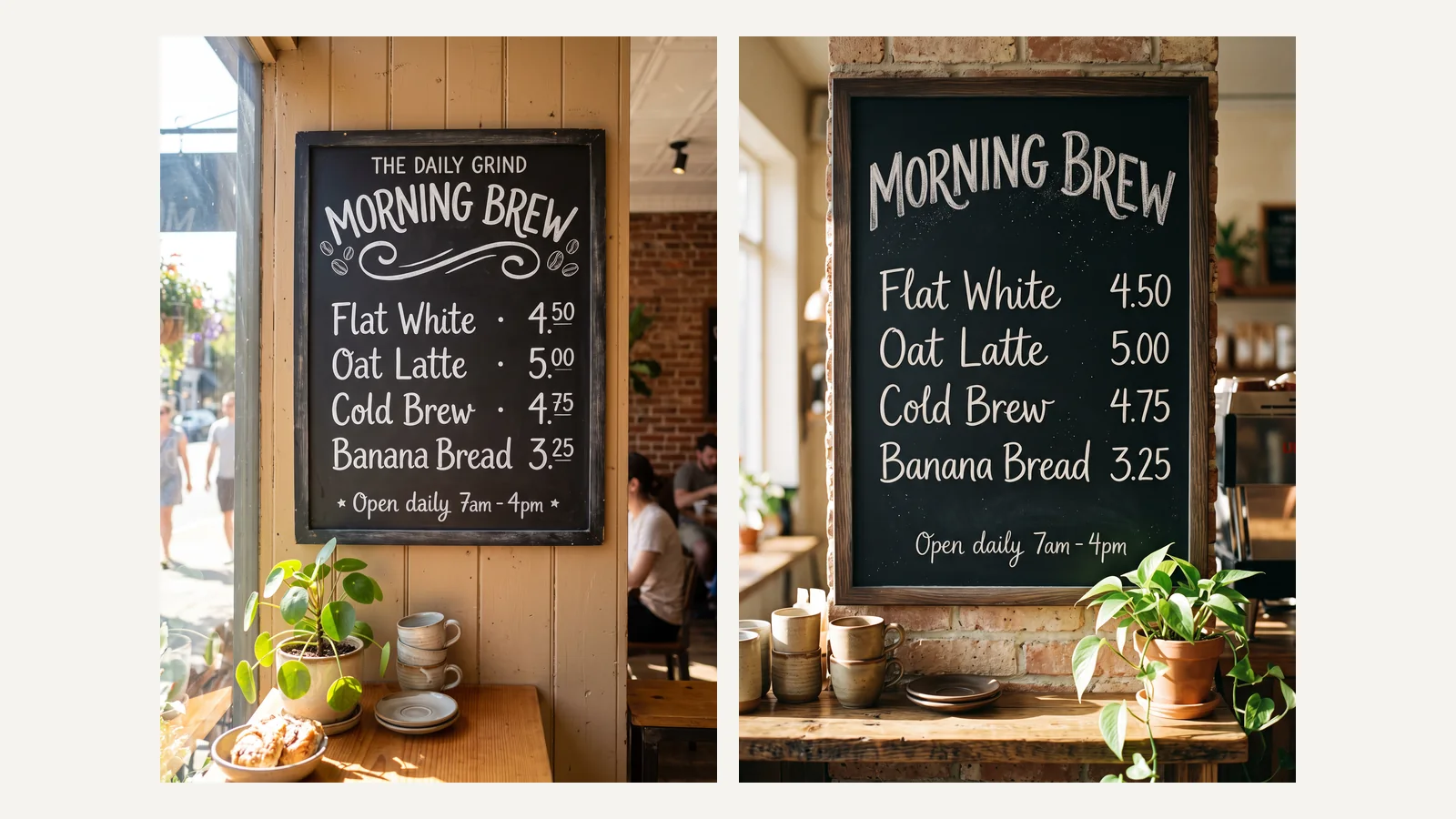
Image prompt: A fictional adult creative director at a cinematic production desk, paper documents and storyboards flowing into one video timeline, image, video, and audio reference cards flowing into another creator workspace, warm practical studio light, realistic editorial photography, balanced 16:9 composition, no logos or readable text.
TL;DR
- Choose Wan 3.0 when a developer team wants an API that accepts a document or public web page, needs per-second billing, or wants one model name for generation, reference work, editing, and extension.
- Choose Seedance 2.5 when creators want a ready browser workspace, free signup credits, up to 50 image, video, and audio references, and less infrastructure to manage.
- Do not call a quality winner yet. A fair verdict needs the same prompts, source assets, duration, resolution, and multiple runs on both systems.
- Open-weight reality: Wan 2.x checkpoints remain relevant, but the official Wan 3.0 repository had no checkpoint files at verification time.
Quick answer
Wan 3.0 is best for teams building document-to-video, webpage-to-video, or API-first production systems. Seedance 2.5 is best for creators who want a hosted workspace and a large reference pack without running model infrastructure. Both support videos up to 30 seconds and audio-aware workflows. Neither deserves a visual-quality crown from curated examples alone. If downloadable weights are a hard requirement, keep Wan 2.x in the comparison because Wan 3.0 checkpoints are not currently published.
Both models run on SeedVideo AI: check current credit rates and input limits on the Wan 3.0 model page and the Seedance 2.5 model page before you commit a budget.
Wan 3.0 vs Seedance 2.5 at a glance
| Decision factor | Wan 3.0 | Seedance 2.5 |
|---|---|---|
| Maximum output duration | Up to 30 seconds | 4 to 30 seconds |
| Core access | Alibaba Cloud Model Studio API and experience center | Hosted SeedVideo AI browser workspace and API |
| Inputs | Text, first or first-last frames, up to 10 images, 5 videos, 5 audio clips, or one document or public web page | Text, frames, up to 30 images, 10 videos, and 10 audio files |
| Native audio | Generates dialogue, BGM, and sound effects | Accepts audio guidance and supports audio-aware generation controls |
| Output resolution | 480P, 720P, 1080P | Current public API docs list 480p to 720p; account controls can vary |
| Pricing | Standard list price $0.05, $0.10, or $0.20 per second by resolution | Credits vary by model, duration, resolution, settings, and plan discount |
| Current promotion | 30% off Standard through Sep 24, 2026 at 00:00 UTC+8 | Current site promotions and plan pricing appear on the pricing page |
| Downloadable 3.0 weights | No checkpoint files in the official repository at verification time | No local checkpoint offering in this hosted workflow |
| Best for | API products, documents, web pages, editing and extension | Browser creation, large reference packs, team-friendly iteration |
| Not best for | Teams that require current downloadable 3.0 checkpoints | Teams that require offline inference or low-level model modification |
What changed with Wan 3.0
Alibaba Cloud describes Wan 3.0 as an all-in-one video model. The same wan3.0-video model name routes text-to-video, image-to-video, first-and-last-frame generation, multimodal reference generation, video editing, and extension. Output runs at 30 fps and can reach 30 seconds.
The unusual feature is not duration by itself. A request can contain one file or one public link, allowing a deck, report, spreadsheet, or webpage to become source material for a video. The official guide also allows up to 10 reference images, 5 video clips, and 5 audio clips in a multimodal package, with 20 reference assets in total.

Alibaba Cloud's Wan 3.0 release page presents 30-second generation, multimodal references, documents, web pages, and native audiovisual output.
That makes Wan 3.0 attractive for information-heavy work. A product brief can become a launch video. A public feature page can become a narrated overview. A training document can become a structured explainer. The API still needs a clear director prompt, and document parsing does not remove the need to verify facts, on-screen text, timing, or brand details.
Best for: developer-led systems that turn structured source material into video.
Not best for: teams that expect a current Wan 3.0 checkpoint they can run inside their own environment.
What Seedance 2.5 offers instead
Seedance 2.5 approaches the same 30-second ceiling from a creator workspace. Its current public API documentation supports 4 to 30-second output, up to 30 images, 10 video references, and 10 audio references. One image becomes a first-frame workflow, two images can define first and last frames, and larger packages become reference-led generation.
The browser experience matters. A marketer or editor can choose a model, attach references, set duration and resolution, write a prompt, and review the result without provisioning a cloud workspace or maintaining an inference service. If the job starts with a single product frame, the Seedance 2.5 image-to-video workflow is the more direct entry point.
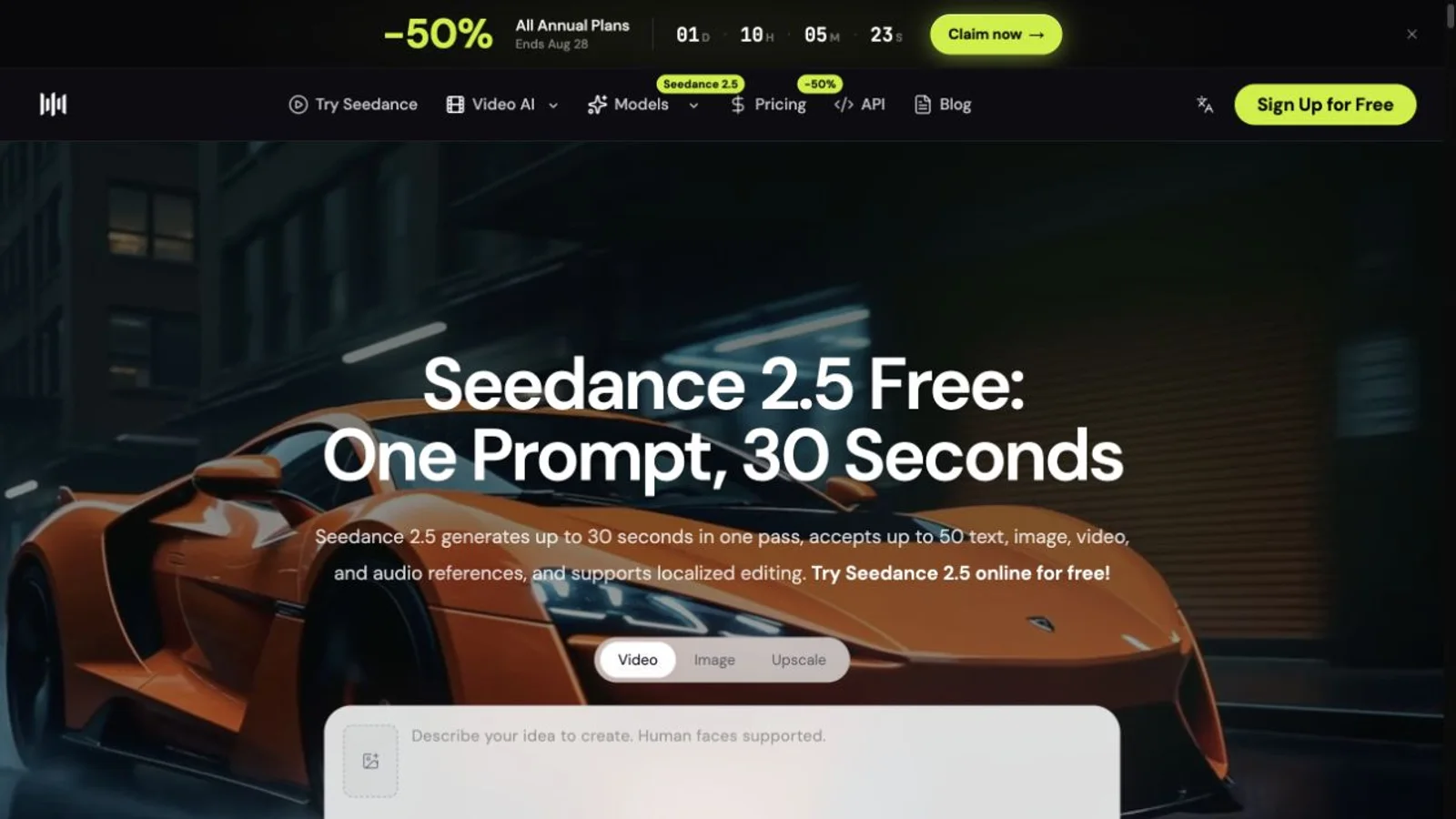
The current Seedance 2.5 model page shows a browser workspace, a 30-second headline, multimodal reference positioning, and generation controls.
Seedance 2.5 does not currently list documents or public web pages as direct reference types in its public API guide. It does support text-only web_search, but that is not the same workflow as passing a page as the primary creative source. For a document-led job, extract a clean brief, storyboard, product images, and approved claims before entering the creator workspace.
Best for: creators who value a finished browser flow, large reference packs, and quick iteration.
Not best for: products that require offline inference, downloadable weights, or custom checkpoint modification.
Pricing: compare the billing unit, not only the headline
Wan 3.0 Standard uses per-second pricing by output resolution. The verified list prices are $0.05 per second at 480P, $0.10 at 720P, and $0.20 at 1080P. Alibaba Cloud's release page currently shows a 30% discount through September 24, 2026 at 00:00 UTC+8, reducing those rates to $0.035, $0.07, and $0.14 per second. A discounted 30-second output is therefore about $1.05, $2.10, or $4.20. Final billing remains subject to the console.
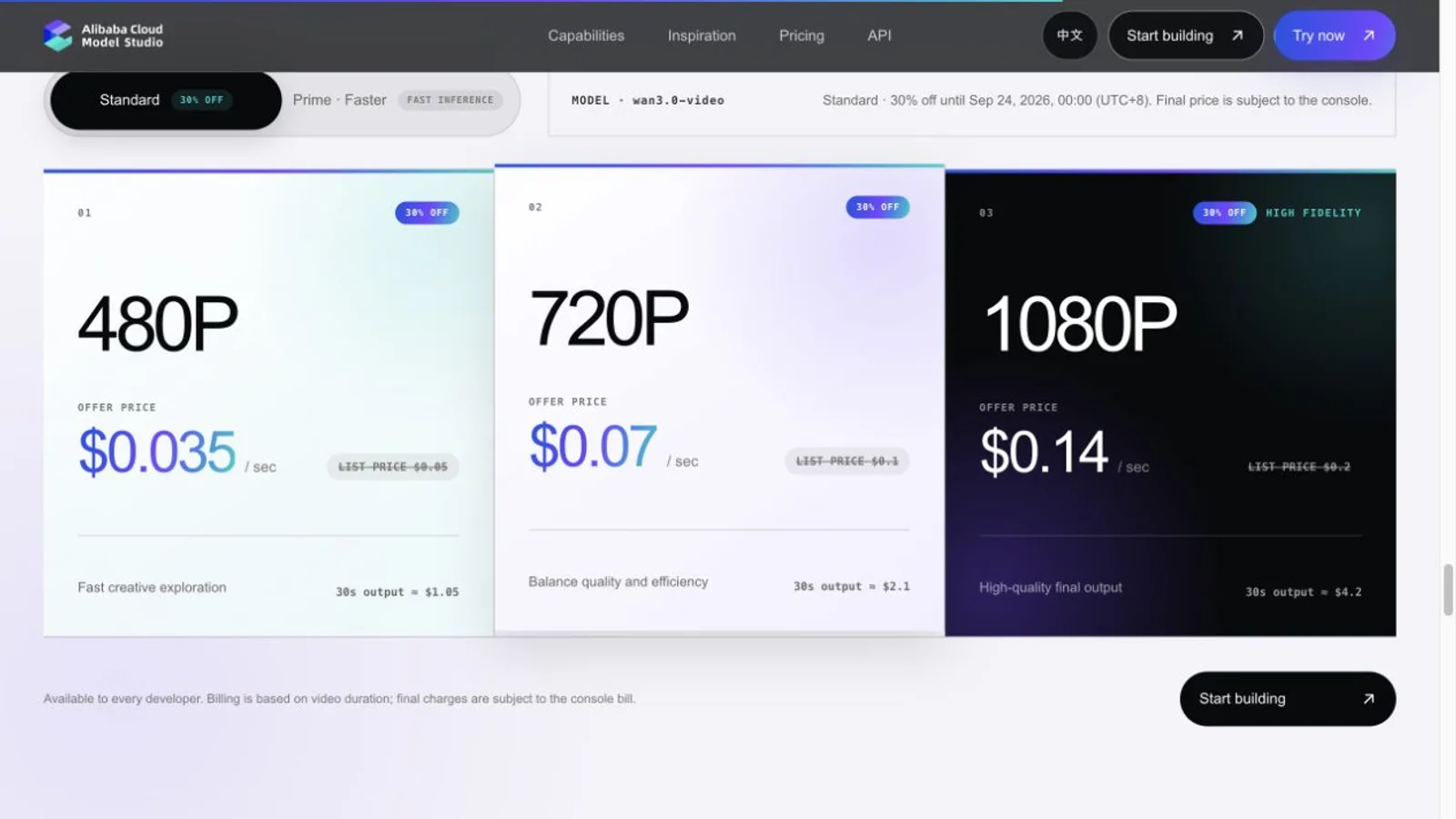
Alibaba Cloud's Wan 3.0 pricing panel showing the current Standard offer rates for 480P, 720P, and 1080P and the promotion deadline.
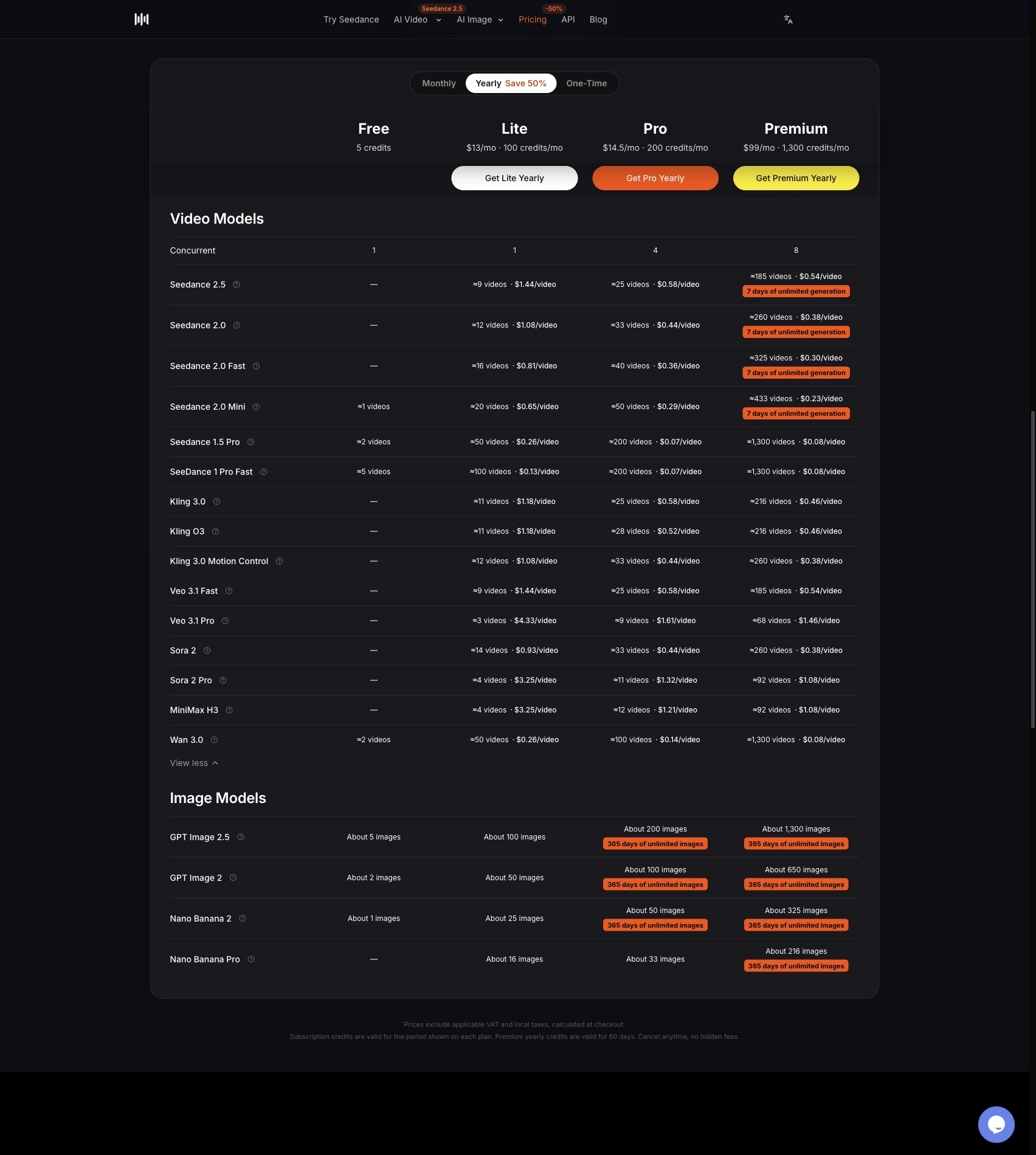
SeedVideo AI pricing is plan and credit based. Each generation uses credits according to the model, duration, resolution, and selected settings. The current FAQ says Lite receives a 10% per-job discount, Pro 30%, and Premium 40%. Commercial use is included with Pro, Premium, yearly subscriptions, and one-time credit packs; Lite monthly does not include it. Checkout terms are the final reference for a specific purchase.
The clean budget comparison is a pilot, not a currency conversion. Record approved outputs, rejected attempts, generation time, credits or API charges, and editing time. A lower price per second can lose its advantage if the workflow requires more retries. A higher plan cost can still win if it shortens review and setup.
Did Wan 3.0 end open weights?
The precise answer is narrower than the headline. At verification time, Alibaba Cloud's official Wan 3.0 GitHub repository contained only README.md and LICENSE. It had no model checkpoint, inference code, release package, or tagged release. The official Wan organization and Hugging Face pages still prominently expose Wan 2.x model families.
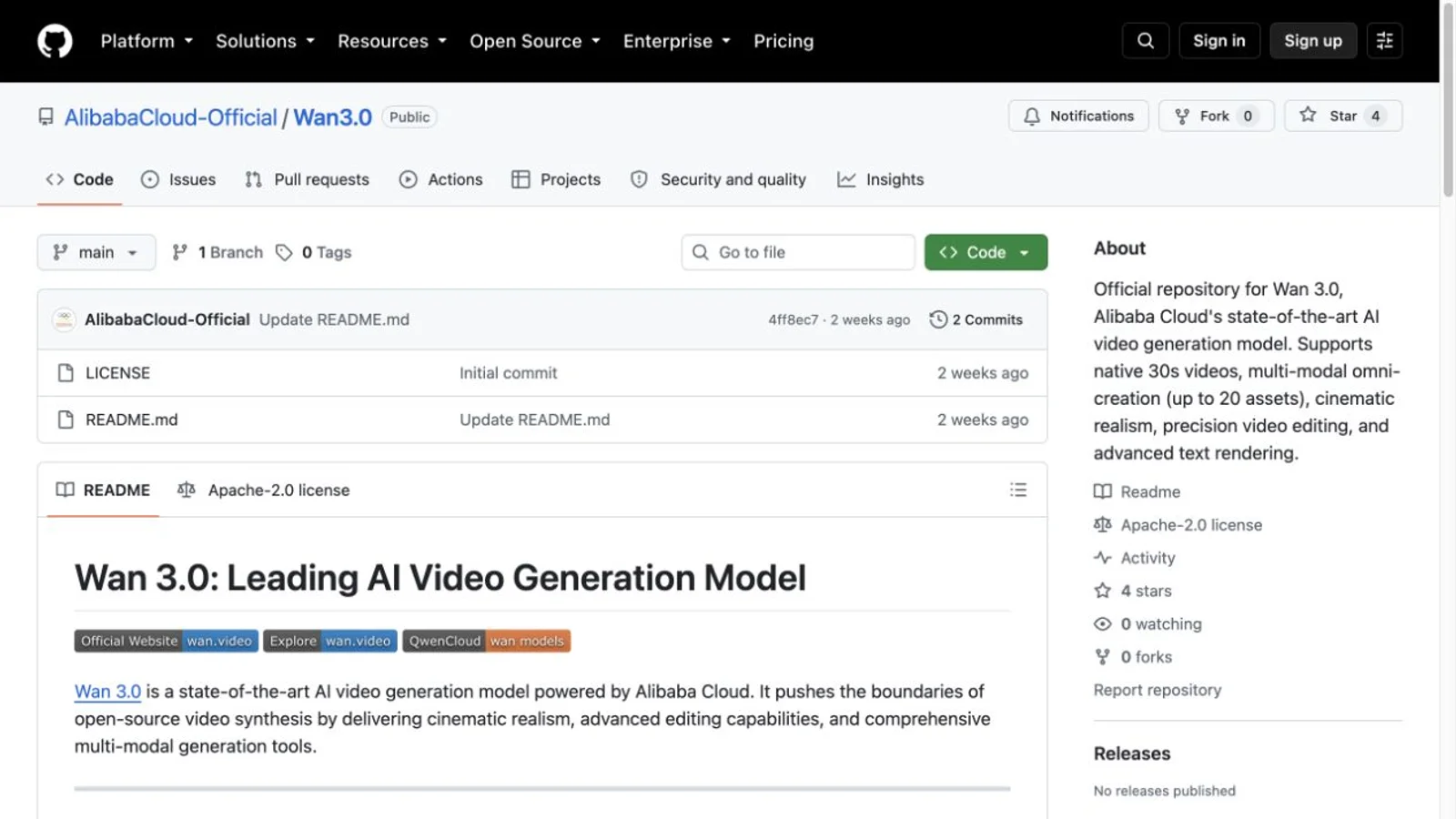
The official Wan 3.0 repository file list at verification time shows README and LICENSE, with no published checkpoint or release package.
That supports a current statement: Wan 3.0 weights have not been published in the official repository. It does not prove Alibaba Cloud will never publish them. The repository itself uses open-source language, so a permanent claim about the future would go beyond the available facts.
Three routes for existing Wan 2.x users
- Keep Wan 2.x for local control. Use the checkpoint you already understand when offline inference, custom nodes, adapters, or reproducibility matters more than the newest feature set. The Wan 2.5 model page remains useful for a hosted view of that family.
- Add Wan 3.0 as a hosted API. Keep local 2.x pipelines for predictable jobs and route document-led, 30-second, or editing tasks to the new API.
- Move the creator layer to a hosted workspace. If the team spends more time maintaining the stack than making videos, test Seedance 2.5 or another managed system with the same inputs and scoring sheet.
For the older open-weight comparison, see Seedance 2.5 vs Wan 2.2. It separates the cost of a downloadable model from the price of a hosted service.
Three real task scenarios
1. Turn a product deck into a 30-second launch film
Wan 3.0 has the cleaner direct path because it accepts a document or public page as source material. Start with one approved deck, remove outdated claims, and ask for a timed structure: problem, product, proof, and final action. Review every rendered number and line of text.
Seedance 2.5 can still handle the job, but the preparation changes. Convert the deck into a concise prompt, key product frames, brand references, and an audio plan. That extra curation can be useful when the deck is crowded or politically messy.
2. Make a product ad from approved visual references
Seedance 2.5 is a strong fit when an editor already has product images, short motion references, a music cue, and a desired first or last frame. Its hosted workflow keeps the reference package and generation controls together.
Wan 3.0 also supports multimodal references and can combine up to 10 images, 5 videos, and 5 audio clips. Choose it when the output must feed an application or a repeatable API pipeline.
3. Build a private, customizable research pipeline
Neither hosted option is the obvious answer if the model must run offline or engineers must alter the inference graph. Stay with an open Wan 2.x checkpoint or another openly distributed model. If only the surrounding application needs to be private, a hosted API may still fit after legal, security, and data-governance review.
A fair quality test
This comparison does not include same-input output tests. Public demos are useful for understanding supported workflows, but they are selected examples, not average outcomes.
Use this protocol before naming a winner:
- Define three jobs: text-to-video motion, identity-led image-to-video, and a reference-heavy product scene.
- Hold prompt meaning, source assets, aspect ratio, duration, and closest shared resolution constant.
- Run each job at least three times on both systems.
- Score prompt adherence, subject stability, motion continuity, audio alignment, artifacts, usable duration, generation time, retry count, and total cost.
- Judge outputs blind when possible, then compare setup and revision effort separately.
Final recommendation
Choose Wan 3.0 when document and web-page input, direct API integration, per-second billing, or built-in editing and extension are central to the product. Choose Seedance 2.5 when the team wants a browser workspace, a large image-video-audio reference package, and a short path from prompt to review.
If local model ownership is non-negotiable, neither hosted workflow replaces an open Wan 2.x deployment today. If visual quality decides the purchase, run the controlled test above. Feature lists and curated reels cannot answer that question honestly.
Ready to test a reference-led creator workflow? Open Seedance 2.5, start with a five-second proof, and expand only after the subject, motion, and audio direction hold together.
FAQ
Is Wan 3.0 open source?
Alibaba Cloud has an official Apache-2.0 Wan 3.0 repository, but at verification time it contained documentation and a license only. No Wan 3.0 checkpoint or inference package was present. Wan 2.x checkpoints remain the relevant option for current local deployment.
How long can Wan 3.0 and Seedance 2.5 videos be?
Both support output up to 30 seconds. Wan 3.0 supports smart duration and extension. Seedance 2.5 public API documentation currently lists a 4 to 30-second duration range.
Can Wan 3.0 turn a PDF or webpage into video?
Yes. The official guide accepts one file or one public link per request. Supported documents include common office and text formats. The page must be publicly accessible when a link is used.
How much does Wan 3.0 cost?
Standard list pricing is $0.05 per second for 480P, $0.10 for 720P, and $0.20 for 1080P. The release page currently shows 30% off through September 24, 2026 at 00:00 UTC+8. Check the console for final charges.
Which is better for commercial work?
Both can fit commercial production, but rights and service terms differ. SeedVideo AI commercial use depends on the selected plan. Wan 3.0 use depends on Alibaba Cloud's service terms. Confirm the current contract and checkout terms for the exact workflow.
Which model has better video quality?
There is not enough same-condition evidence here to name a winner. Compare multiple runs with identical prompt meaning, inputs, duration, aspect ratio, and resolution, then score motion, consistency, audio, artifacts, time, and cost.