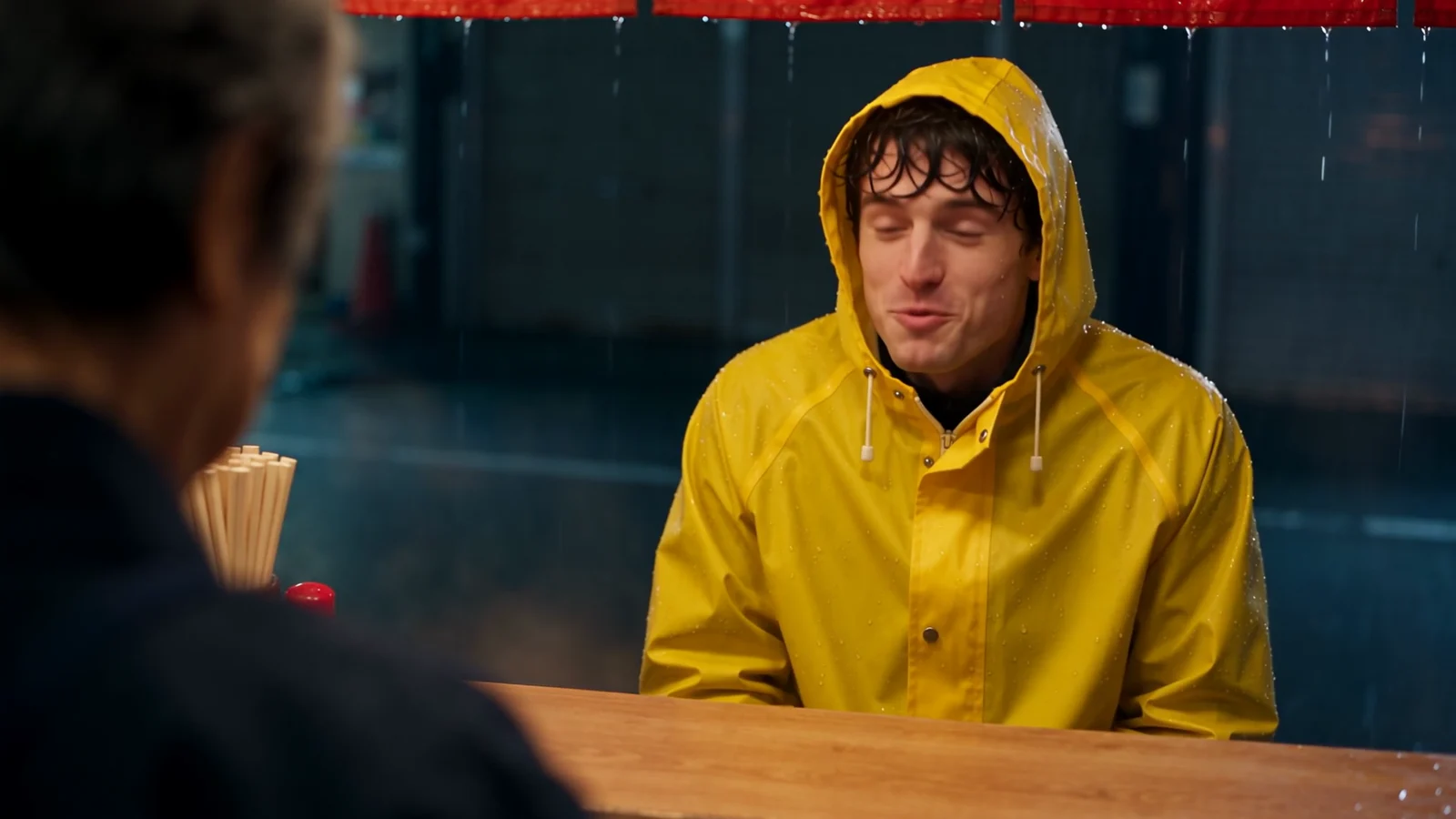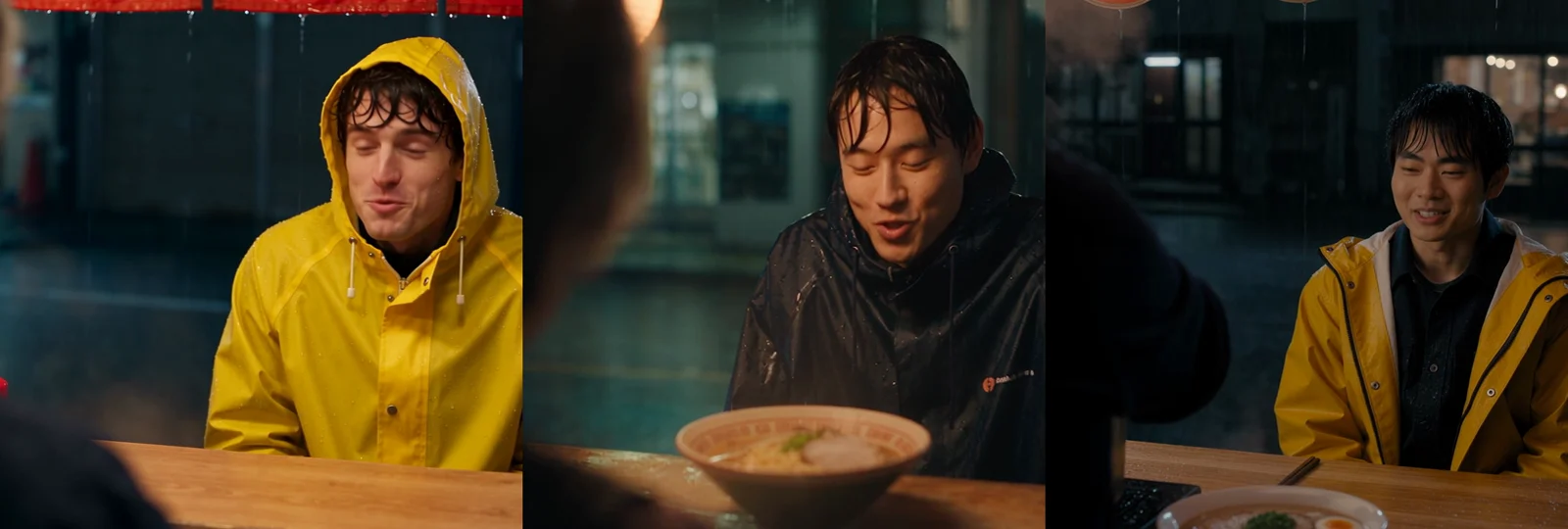
Yes. MiniMax H3 has content restrictions, and they sit in two places. The hosted version that MiniMax runs checks your text, images, video and the enhanced prompt it writes from them, and blocks anything it suspects is unlawful, pornographic or infringing someone else's rights. MiniMax's platform terms also ban obscene, pornographic, violent, terroristic and criminal-incitement content outright. The second layer is the license on the open H3-Base weights. Those weights ship without MiniMax's hosted pipeline, but the license's Acceptable Use Policy still applies: no harming minors, no impersonating a real person without consent, no getting around safety guardrails. The license also grants no rights at all in the United States, the European Union, the United Kingdom or South Korea. So H3 is not an uncensored model. Nothing in MiniMax's published rules bars ordinary drama, action, romance or tense scenes that stay non-graphic. Explicit sexual material, graphic harm and unauthorized real people are where it stops.
Quick Answer
Can MiniMax H3 make NSFW or adult videos? No. MiniMax's platform terms prohibit obscene and pornographic content, and the hosted model screens prompts, uploads and enhanced prompts for it.
Can a harmless prompt still get blocked? Yes. MiniMax says its filters cannot eliminate false positives, so a clean request can occasionally be refused and needs a second attempt with different wording or a different source file.
Is a self-hosted copy of the open weights uncensored? No. The open H3-Base release leaves out MiniMax's hosted moderation, but its license still forbids harmful, unlawful and impersonating uses and any attempt to bypass safeguards, and it does not cover the US, EU, UK or South Korea.
Can you use a real person's face or name? Only with that person's consent. The license bans impersonating someone without consent, and the API has a separate error for prompts that make identity claims.
What MiniMax H3 blocks: the official rules
Last verified: November 27, 2026. All policy wording below was checked against MiniMax's and BytePlus's own pages on that date.
MiniMax spreads its rules across three documents. The open-source announcement describes the automated checks on the hosted service. The MiniMax Open Platform terms list banned content for anyone using the API. The MiniMax H3 Community License and its Exhibit A, the Acceptable Use Policy, govern the weights and every output made with them.
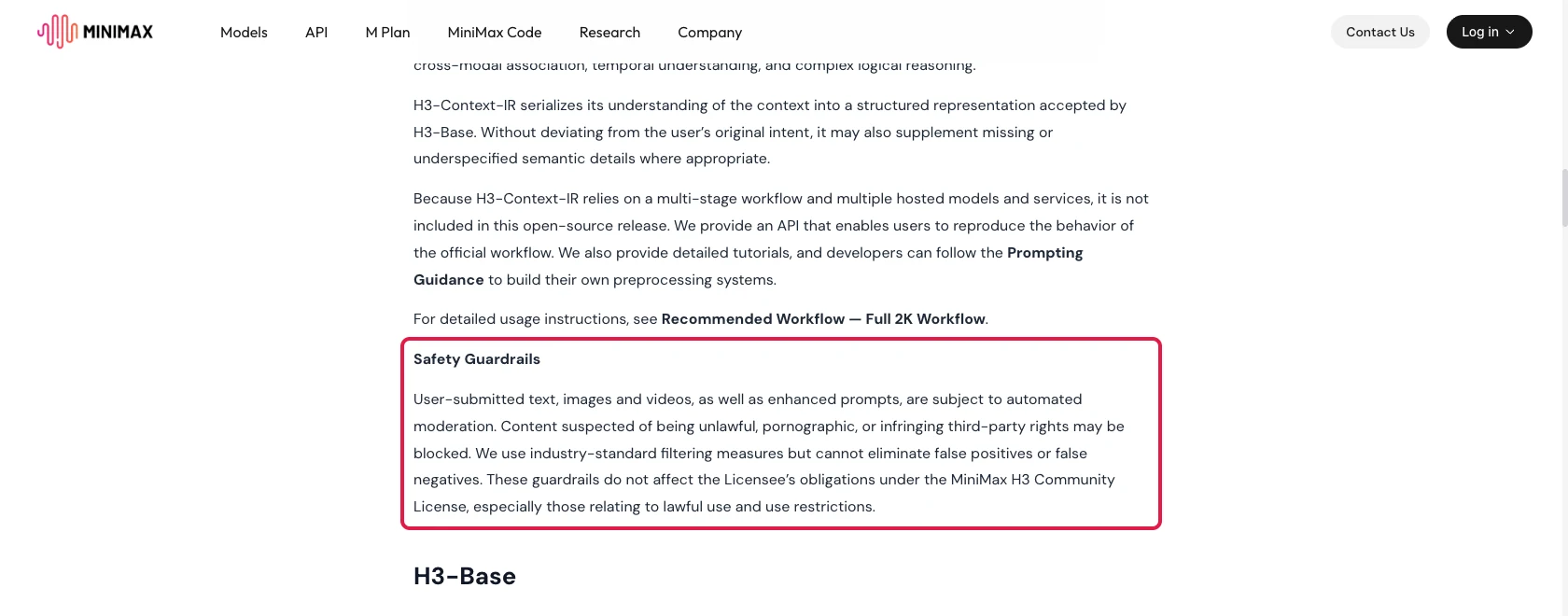
MiniMax H3 open-source announcement, Safety Guardrails section.
| Category | What MiniMax's own text says | Where it is written |
|---|---|---|
| Sexual content | Bans "obscene, pornographic" content; hosted checks may block content suspected of being pornographic | Open Platform terms; Safety Guardrails section |
| Violence and terrorism | Bans violent, murderous, terroristic and criminal-incitement content, and any use that encourages violent extremism | Open Platform terms; Acceptable Use Policy item 16 |
| Minors | Bans any use that exploits or harms minors | Acceptable Use Policy item 6 |
| Real people | Bans impersonating another person without consent, and harassment or defamation | Acceptable Use Policy items 9 and 13 |
| Copyright and other rights | Bans infringing third-party intellectual property; hosted checks may block content suspected of infringing third-party rights | Acceptable Use Policy item 2; Safety Guardrails section |
| False information | Bans verifiably false content meant to harm others or influence elections, and fake reviews | Acceptable Use Policy items 7 and 8 |
| Undisclosed AI content | Bans posting machine-generated content in public without clearly saying it is machine-generated | Acceptable Use Policy item 12 |
| Getting around the filters | Bans circumventing or bypassing any safety guardrail or safeguard | Acceptable Use Policy item 5 |
The Acceptable Use Policy is dated August 2, 2026 and runs to 20 items. The three that matter most for video are shown below.
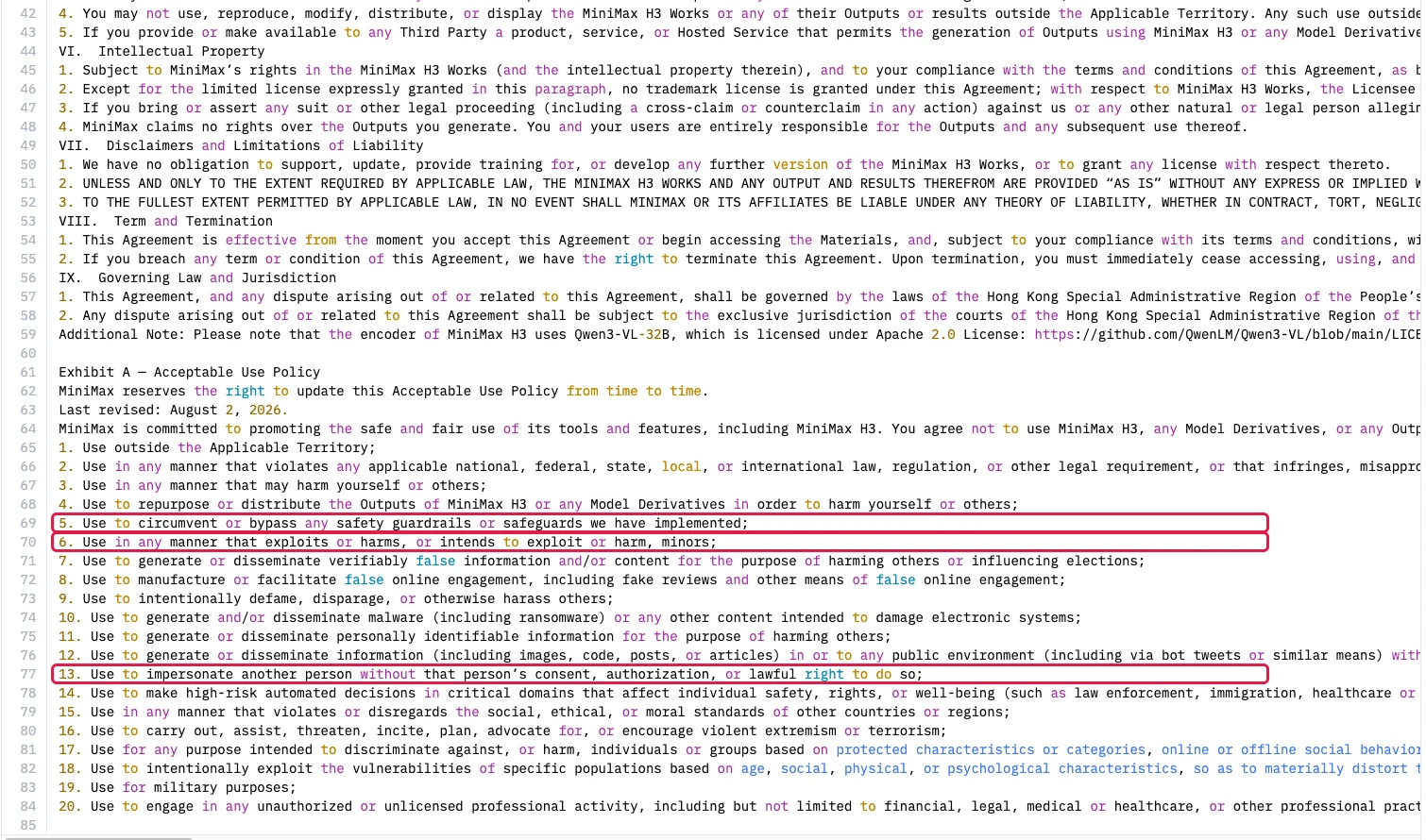
MiniMax H3 Community License, Exhibit A, on Hugging Face.
The platform terms put sexual and violent content in a single line, item 7 of the activities users must not engage in.
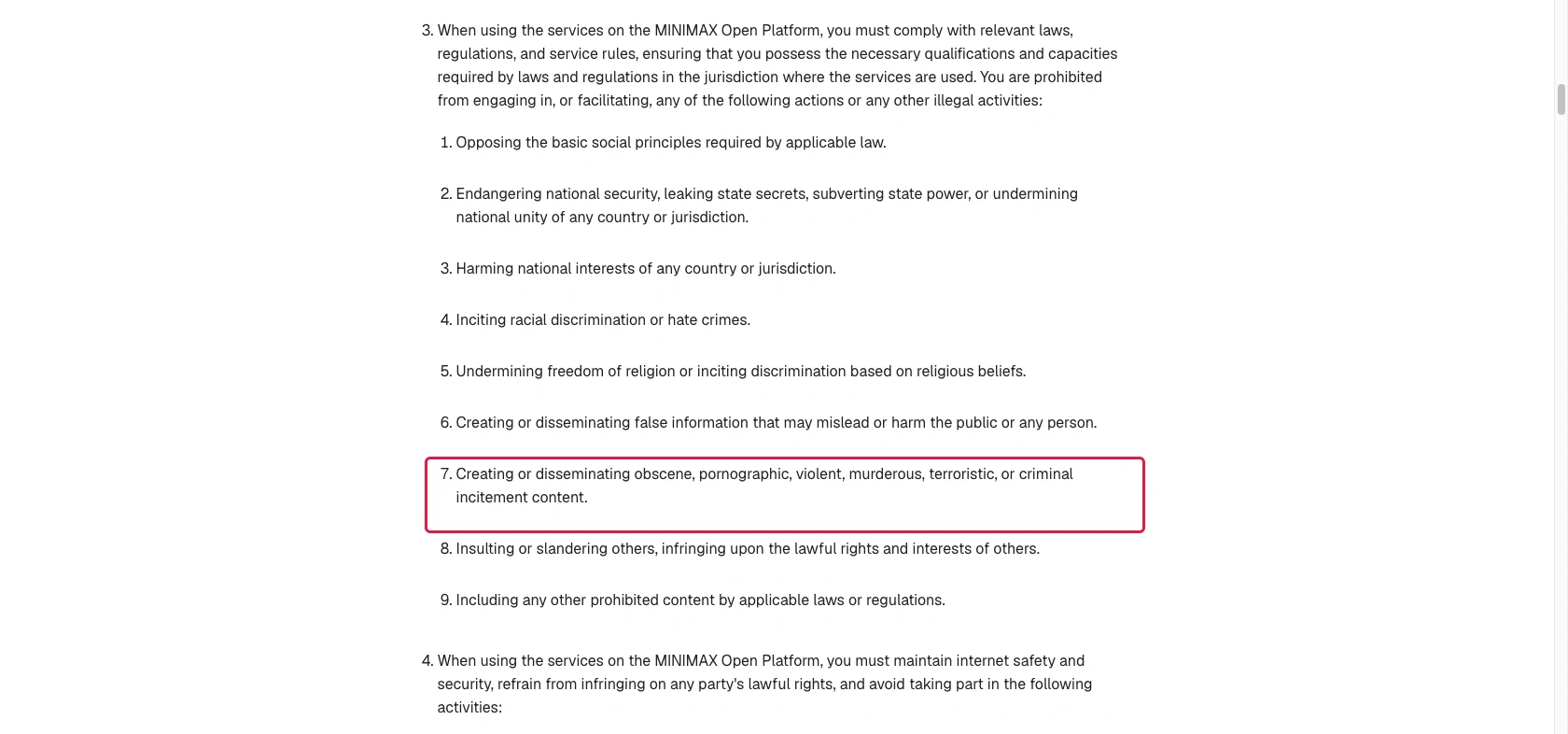
MiniMax Open Platform terms of service, effective March 30, 2026.
How MiniMax H3 tells you a request was refused
The hosted API does not return a vague failure. Each refusal comes back with a numbered error, and the number tells you which part of your request to change. MiniMax's error code reference lists four that relate to content:
| Code | MiniMax's message | Which part failed | What to change |
|---|---|---|---|
| 1026 | input content flagged as sensitive | Your prompt or uploaded image or video | Rewrite the scene or swap the source file |
| 1027 | output content flagged as sensitive | The generated clip itself | Steer the scene away from what the model drew; the wording alone may be fine |
| 1040 | input audio sensitive | An uploaded audio reference | Use a different audio clip |
| 1046 | prompt rejected by identity policy | A claim about who someone in the shot is | Remove the identity claim and describe a fictional person |
The video endpoint returns 1026 with HTTP status 422 and the message "video description contains sensitive content". A 1027 is the one that confuses people most: the prompt passed, the model made a clip, and the clip failed the check. If you get 1027 twice for the same idea, change what happens on screen rather than the adjectives.
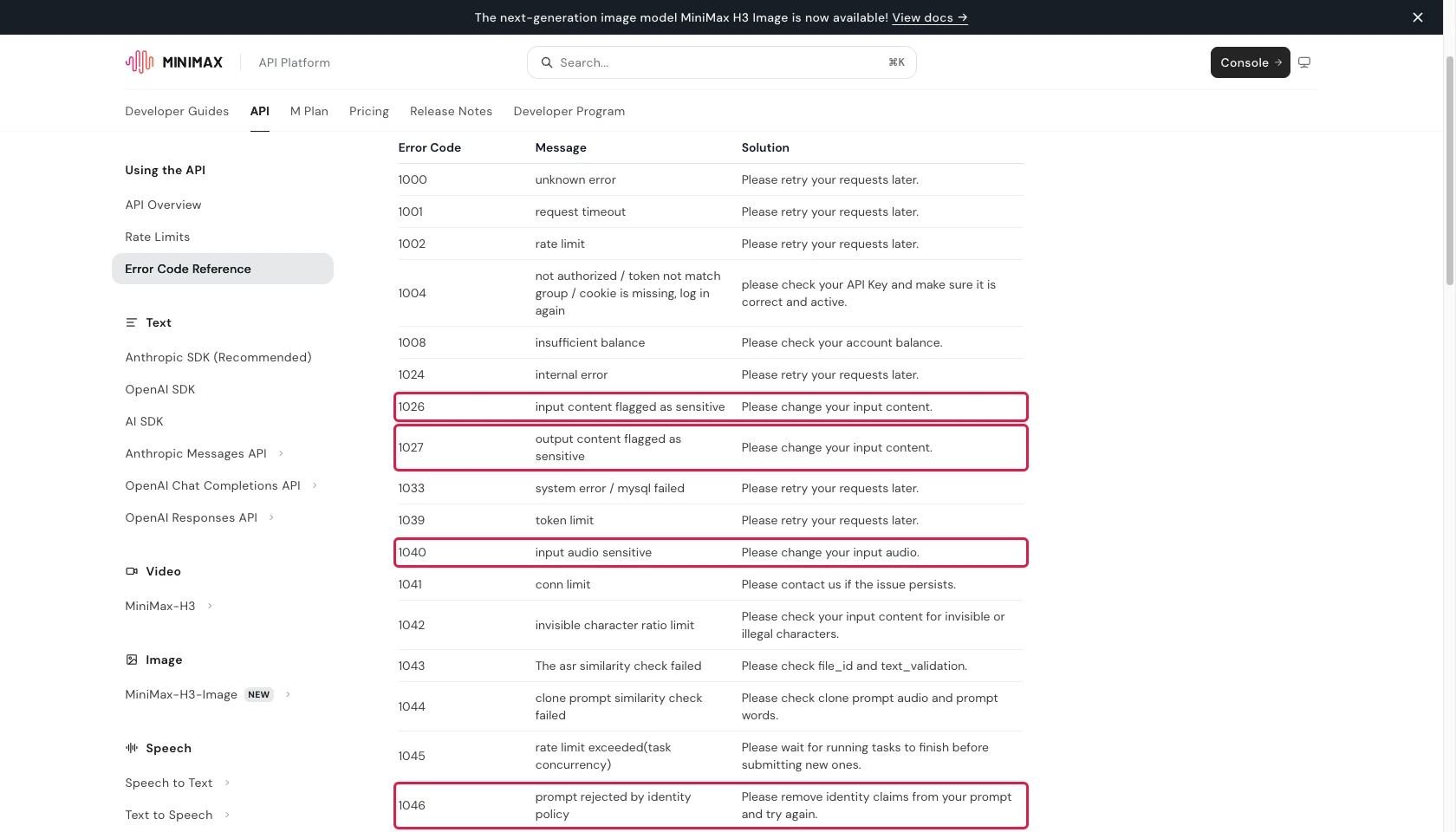
MiniMax API error code reference.
Is MiniMax H3 censored when you run the open weights?
This is the part most "uncensored" searches are really asking about. MiniMax released the H3-Base weights, but the full H3 system has three parts, and only one of them is open. H3-Context-IR, the hosted step that interprets your inputs and writes the enhanced prompt, is not in the release. The automated checks MiniMax describes cover user inputs and those enhanced prompts in the hosted pipeline.
| Question | Hosted MiniMax H3 (API) | Self-run H3-Base weights |
|---|---|---|
| Automated content checks | Yes, on text, images, video and enhanced prompts | Not included in the open release |
| Rules that apply | Open Platform terms and the H3 Acceptable Use Policy | Community License and the same Acceptable Use Policy |
| If you offer it to other people | You are responsible for your end users' compliance | You must build, test and maintain safeguards against policy-breaking outputs and keep a way to report violations |
Two clauses close the gap people hope to find. Section V.5 of the license requires anyone who lets others generate with H3 to run "reasonable and proportionate" safeguards and not to weaken them. Item 5 of the Acceptable Use Policy forbids circumventing safety guardrails. MiniMax's own self-hosting guide also says its SGLang serving setup does not by itself provide the safeguards the license requires. The license itself only covers use outside the US, EU, UK and South Korea. A local copy changes where the checks run. It does not change what is allowed.
The same license sets the commercial terms. A business whose products earn more than $20 million a year needs MiniMax's prior written authorization, a commercial product built on H3 must show "MiniMax H3" in its interface, and MiniMax claims no rights over the outputs you generate.
How to rewrite a refused MiniMax H3 prompt
A rewrite should change what appears on screen, not hide the same content behind softer words. Disguising banned content is the circumvention that item 5 forbids, and the output check usually catches it anyway because it judges the clip, not your phrasing. What you can keep is the intent: the mood, the tension, the style.
| Refused request | Intent worth keeping | Compliant direction |
|---|---|---|
| A woman in lingerie posing seductively on a bed | Glamour, confidence, a fashion look | A fashion editorial with styled clothing, location and camera move |
| A gangster shoots a man in the head, blood on the wall | Crime-drama tension | The standoff before anything happens, cut before the violence |
| [A named actor] giving a keynote speech | A charismatic speaker on stage | A described fictional speaker with a clear look and stage setting |
| [A cartoon character] running through a field | A cute mascot moment | An original character with its own shape, color and outfit |
Here are two of those directions written out as complete prompts:
A fashion editorial at dusk: a woman in a tailored emerald satin evening gown leans on a hotel balcony rail, wind lifting the fabric, the camera dollies in slowly, warm city lights glow below, soft jazz and distant traffic in the background.
A tense standoff in a rain-soaked alley at night: two men face each other under a flickering neon sign, one slowly reaches toward his coat, the camera pushes in on his eyes, thunder rumbles, and the shot cuts to black before anything happens.
For prompt structure beyond content issues, the MiniMax H3 prompting guide covers subject, action, camera, light and sound in order.
MiniMax H3 vs Seedance 2.5: content policy differences
Both models refuse sexual content and unauthorized real people. The differences are in how they handle faces, labels and local use. This table uses only official text: MiniMax's documents above and, for Seedance 2.5, the BytePlus GenAI Acceptable Use Policy (effective September 30, 2026) and the Seedance 2.5 launch post.
| Policy point | MiniMax H3 | Seedance 2.5 |
|---|---|---|
| Sexual content | Platform terms ban obscene and pornographic content | AUP bans content promoting sexually explicit material |
| Real faces in uploads | No blanket face block in the documents above; impersonation without consent is banned and identity claims in prompts are rejected (1046) | Technical controls restrict video made from images or videos containing real faces; vetted clients can complete real-person verification and likeness authorization |
| Minors | Any use that exploits or harms minors is banned | Abuse or exploitation of minors is banned; AI customers must ensure age-appropriate experiences |
| Getting around filters | Circumventing safeguards is banned | Evading content filtering or inducing prohibited content is banned |
| AI labels | Public machine-generated content must be disclosed; businesses offering services built on the API must mark generated content | Visible watermarks plus C2PA Content Credentials; removing deep-synthesis labels is banned |
| Open weights | H3-Base weights under the Community License, not licensed in the US, EU, UK or South Korea | Hosted only; BytePlus says its service is not available in the United States |
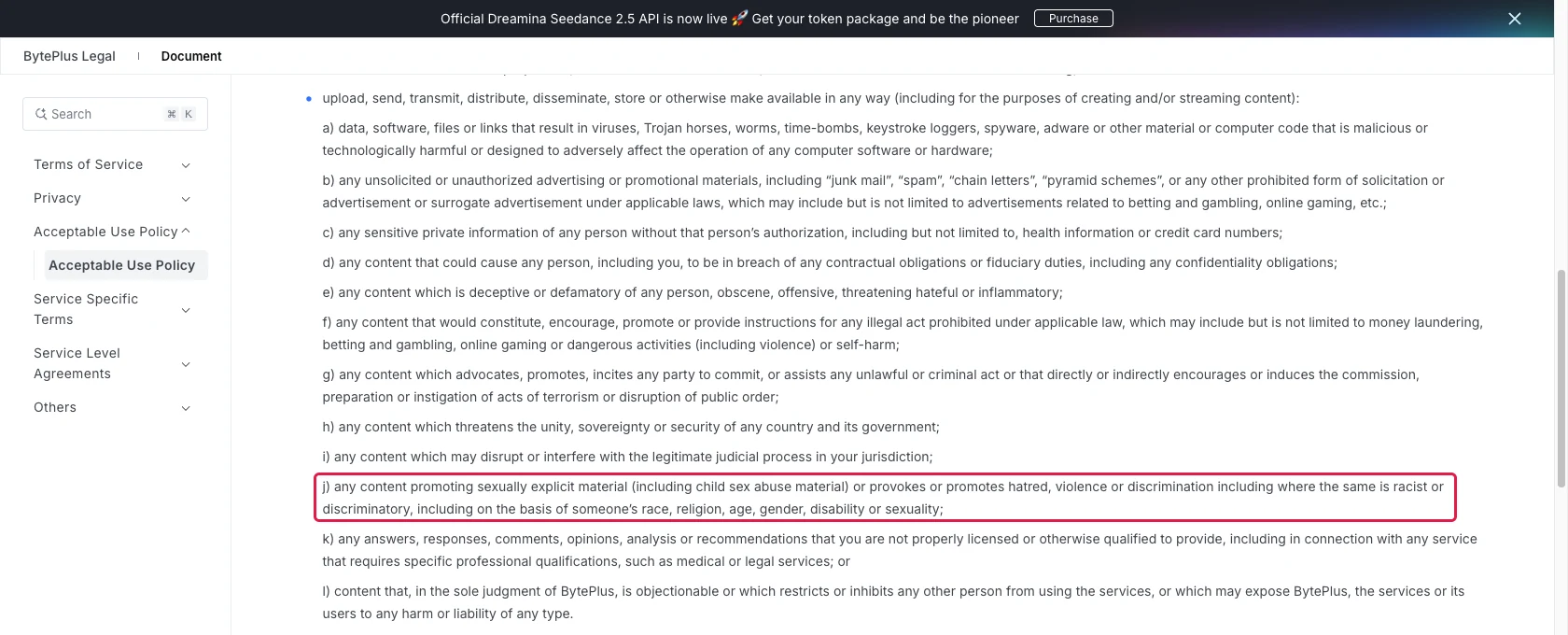
BytePlus Acceptable Use Policy, which covers Seedance 2.5.
The practical gap is real faces. If your workflow animates a photo of a real person who has given permission, Seedance 2.5 asks for a formal authorization step, while MiniMax relies on its consent rule and identity-claim check. For the full capability comparison, including length, resolution and price, see MiniMax H3 vs Seedance 2.5. For Seedance's own refusal reasons with counts, see why Seedance blocks or refuses a prompt.
MiniMax H3 refusals on SeedVideo AI
SeedVideo AI turns down requests that break the content policy. Between October 21 and November 20, 2026, 16 MiniMax H3 jobs ran on the site. 5 finished: three 15-second clips, one 10-second clip and one 9-second clip, all at 2K. 11 failed: 7 were content-policy refusals and 4 had invalid parameters. That sample is far too small for a refusal rate, so treat it as a record of what happened, not a forecast. What it does show is that a refusal is the most common way an H3 job ended without a video in that month.
A refused job on SeedVideo AI returns its credits, so trying a rewritten prompt costs only the new job. MiniMax H3 sits in the same model picker as Seedance and Kling, at 2K for 5 to 15 seconds, and is open to paid plans. A 5-second 2K clip is quoted at 23 credits before plan discounts.
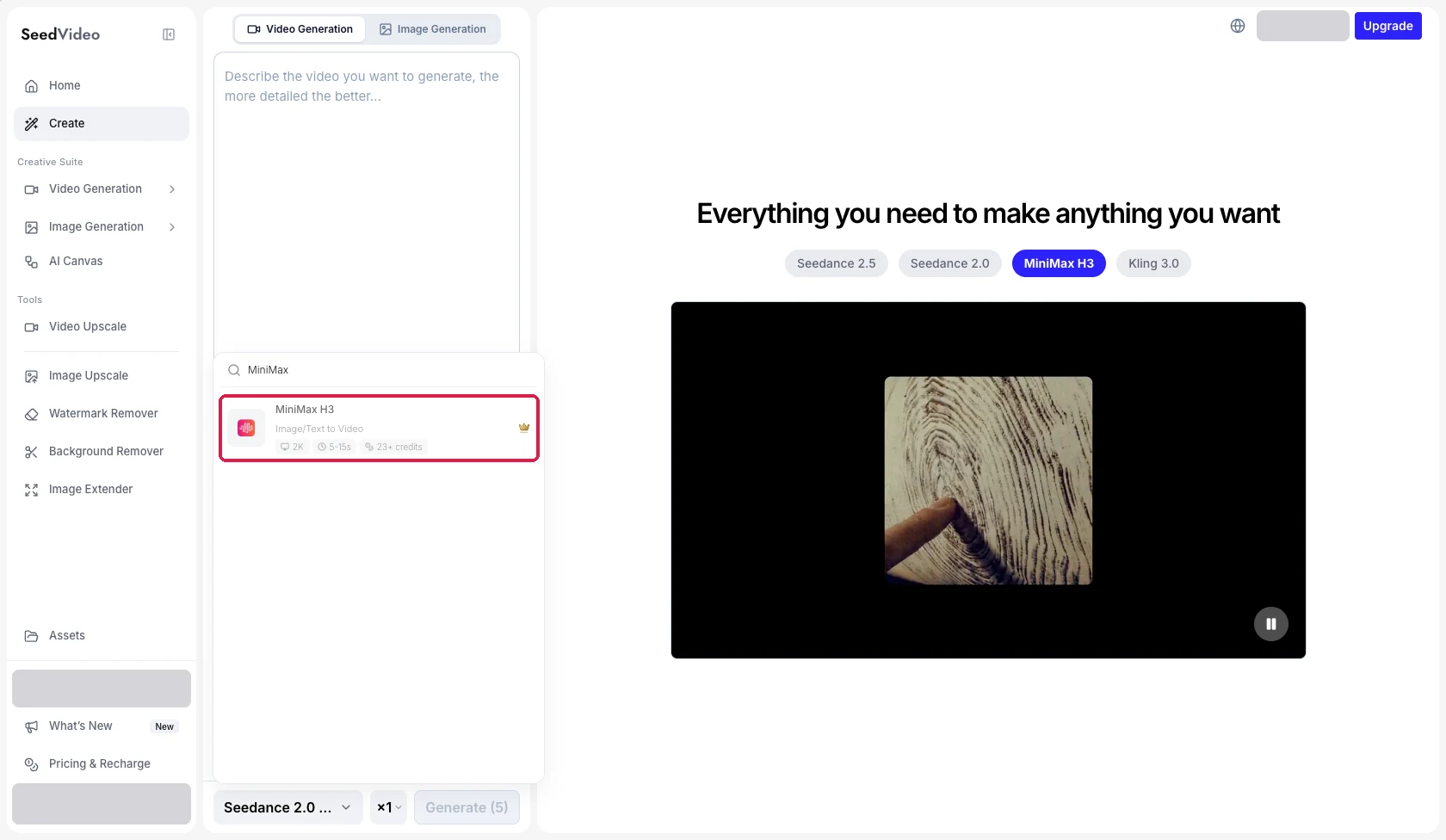
SeedVideo AI video workspace with MiniMax H3 in the model picker. Account details are hidden.
To try a rewritten prompt, open the MiniMax H3 model page or go straight to the AI text-to-video generator. If you start from a photo, use the AI image-to-video generator and pick a source image you own. More model match-ups are collected under model comparisons.
FAQ
Is MiniMax H3 uncensored?
No. The hosted model runs automated checks on prompts, uploads and enhanced prompts, and MiniMax's terms ban pornographic, obscene and graphically violent content. The open weights come without the hosted checks but with a license that still bans harmful uses and any attempt to bypass safeguards.
Am I charged when MiniMax H3 refuses a prompt?
On SeedVideo AI, no: a refused or failed job returns its credits. MiniMax's API documentation does not state a billing rule for refused tasks, so check your own usage records if you call the API directly.
What does MiniMax H3 error 1027 mean?
It means the generated clip, not your prompt, was flagged as sensitive. The prompt passed the first check, so rewording adjectives rarely helps; change what happens on screen, the setting or the source image, then run it again.
Can I run MiniMax H3 in the United States or Europe?
Not under the Community License. It excludes the United States, the European Union, the United Kingdom and South Korea, and MiniMax asks anyone there who wants to deploy the model to contact it for a separate license.
Do MiniMax H3 videos have to be labeled as AI-generated?
When published, yes. The Acceptable Use Policy bans posting machine-generated content in public without clearly disclosing it, and MiniMax's platform terms require businesses that offer services built on its API to mark generated content. The license also encourages adding an AI-generation identifier to output files.
Try MiniMax H3 within the rules
MiniMax H3 is a moderated model with an open-weight option, not an unrestricted one. Plan your scene around the policy from the start: original characters, consenting or fictional people, and tension that stays off-screen. Then run it on the MiniMax H3 model page, where a refused attempt gives its credits back.